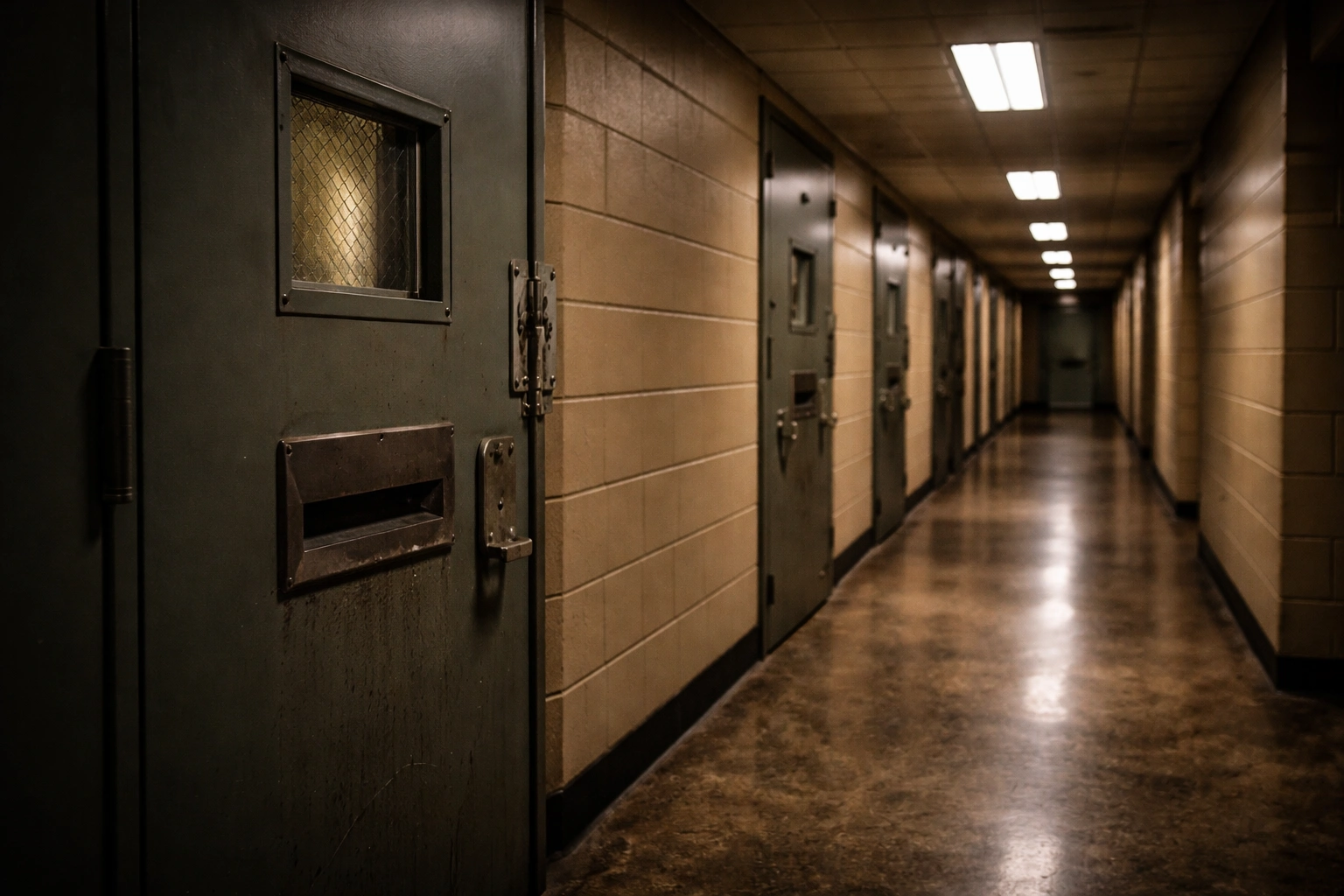
The Intake and Booking Experience at Lew Sterrett
The first night in Dallas County Jail begins with the intake process at Lew Sterrett Justice Center. From the moment of arrival, defendants are processed through a series of administrative, medical, and security steps before being assigned to a housing unit.
The intake area is loud, brightly lit, and crowded — especially on weekend nights. Defendants are searched, fingerprinted, photographed, and given a medical screening. Personal property including clothing, phone, wallet, and jewelry is inventoried and stored until release.
What Happens During Intake
Intake includes identity verification using government records and fingerprint matching, a full-body search, medical questionnaire, mental health screening, and assignment of an SPN number. Defendants with outstanding warrants in other jurisdictions may face additional holds during this stage. The entire intake process takes several hours depending on facility volume.
Clothing and Personal Property
All personal items are confiscated and inventoried during intake. Defendants are issued jail-provided clothing and bedding. Valuables are documented on a property receipt that the defendant signs. This receipt is important — it serves as the record for property return upon release. Families should not attempt to bring clothing or personal items to the facility during the booking process.
Housing Assignment and Classification at Dallas County Jail
After intake is complete, defendants are classified based on the severity of their charges, criminal history, medical needs, and security risk. This classification determines which housing unit they are assigned to within the Lew Sterrett complex.
Housing assignment may not happen immediately — defendants often spend their first hours in a holding area while classification is processed. The holding areas are communal spaces with bench seating where defendants wait for assignment to a more permanent housing unit.
How Classification Works
Dallas County uses a classification system that separates inmates by offense severity, gang affiliation status, medical needs, and behavioral risk factors. First-time misdemeanor defendants are typically housed in minimum-security units, while felony defendants or those with extensive criminal histories are assigned to higher-security areas. Classification staff conduct interviews and review records before making housing decisions.
What Housing Units Look Like
Housing units at Lew Sterrett vary by security level. Minimum-security units are typically dormitory-style open rooms with bunk beds. Higher-security units use individual or double cells. Each unit has a common area with tables, a television, phones, and a shower area. Conditions are basic — the facility is designed for short-term detention, not long-term housing.
Daily Schedule and Conditions Inside Dallas County Jail
Life inside Lew Sterrett follows a structured daily routine. Meals are served at set times, lights follow a schedule, and movement within the facility is controlled by corrections officers. Understanding this routine helps families know what their loved one is experiencing and when communication is most likely.
The facility provides three meals per day, access to a commissary for additional items, and recreational time in designated areas. Medical services are available for inmates with health needs, and mental health staff respond to crises.
Meals and Commissary
Meals are provided three times daily on a set schedule. The food is institutional — basic but meeting nutritional requirements. Inmates can purchase additional snacks, hygiene items, and writing supplies through the commissary system using funds deposited to their account. Families can add money to a defendant's commissary account through the jail's approved deposit methods.
Medical Care and Medications
Lew Sterrett provides on-site medical care including nursing staff, physician visits, and emergency response. Defendants who take prescription medications should inform intake staff during the medical screening. The jail pharmacy can verify and continue prescribed medications, though there may be a delay in obtaining them. Families concerned about a loved one's medical needs can contact the jail medical unit directly.
How to Communicate with Family from Dallas County Jail
Communication between inmates and family members is available through phone calls, video visitation, and written correspondence. Each method has specific rules and costs that families should understand before attempting contact.
Phone access becomes available after the defendant is classified and assigned to a housing unit. Calls are collect or prepaid through the jail's contracted phone service. All calls are recorded and monitored, and call duration is limited.
Phone Calls and Video Visits
Inmates can make outgoing calls from phones in their housing unit during designated hours. Calls require the receiving party to have an account set up with the jail's phone service provider or to accept collect calls. Video visitation is scheduled through the jail's online system and may replace or supplement in-person visits.
What Families Can Do to Help
Deposit money into the inmate's commissary account so they can purchase essentials. Set up a phone account to receive calls. Schedule a video visit through the jail's visitation system. Most importantly, contact Act Quick Bail Bonds at (214) 744-1414 to begin the bond process — the fastest way to bring your loved one home is to post bond and get them released.
Frequently Asked Questions
Common Questions About This Topic
Can a defendant make a phone call during the first night at Dallas County Jail?
Phone access typically becomes available after the defendant is classified and moved to a housing unit, which may not happen during the first night depending on when the arrest occurred. During intake and holding, phone access is extremely limited.
Is the defendant safe during their first night at Lew Sterrett?
Lew Sterrett has corrections officers stationed throughout the facility and classification procedures designed to separate inmates by risk level. Defendants with specific safety concerns should communicate them to classification staff during the intake process.
Can family members bring food or clothing to someone at Dallas County Jail?
No. Outside food, clothing, and personal items are not accepted at Lew Sterrett during booking or detention. Inmates receive jail-issued clothing and meals. Families can support their loved one by adding funds to their commissary account.
How soon after arrival at Lew Sterrett can bond be posted to avoid spending a night in jail?
Bond can be posted as soon as magistration is complete and the bond amount is entered into the system. If a bail bond agent is standing by, the process can begin immediately after magistration. Call Act Quick as soon as you learn of the arrest to minimize time in custody.